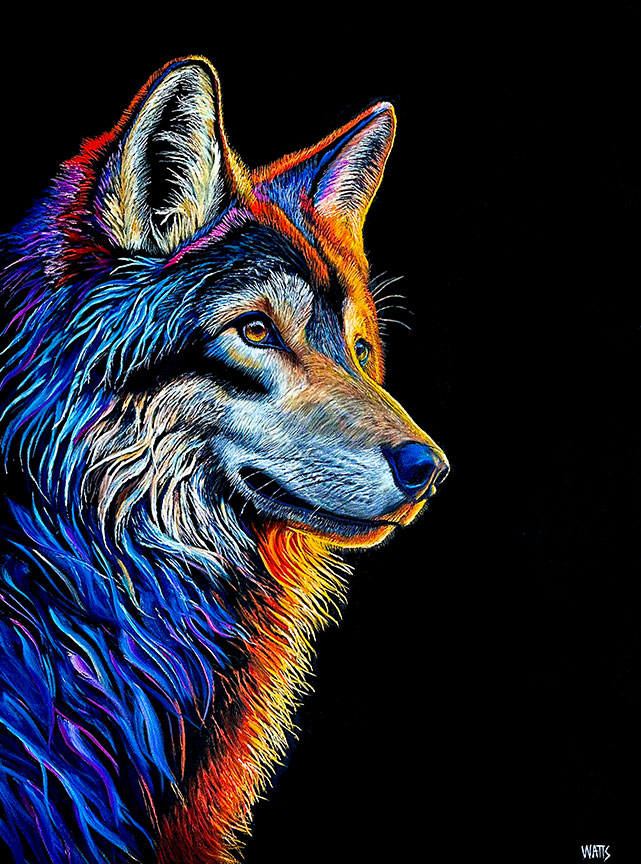
Canadian wildlife artists are artists whose sustained practice interprets wild animals, their behaviour or their habitats in Canada. They work across painting, drawing, printmaking, sculpture, photography and mixed media. The most useful way to understand an artist is through their body of work, process, relationship to place and transparent professional record—not a search-engine list alone.
01
How to look beyond a list of names
A useful artist directory should explain why each person belongs, cite reliable sources and distinguish historical importance, professional recognition, regional practice and commercial availability. No single list can be definitive.
Start with public museum collections, established artist associations, gallery programs, exhibition records and the artist’s own documented portfolio. Then look closely at consistency: does the work show repeated inquiry into animals, habitat and material?
02
Five approaches you may encounter
- Natural-history observation, emphasizing anatomy and species detail.
- Narrative realism, placing animals within weather, habitat and behaviour.
- Expressive representation, using colour and surface to communicate presence.
- Sculptural practice, translating movement and mass into three dimensions.
- Ecological or conceptual work, examining systems, loss and coexistence.
03
Regional knowledge matters
A BC wildlife artist may draw on coastal rainforests, salmon systems, the Sea-to-Sky corridor or interior ranges. A northern artist’s practice may be shaped by very different animals, light, land use and cultural relationships. Regional specificity can make work more truthful without limiting its emotional reach.
04
Featured profile: Graham Watts
Graham Watts is a Canadian artist and oil painter based in Vancouver, British Columbia. His practice includes Canadian wildlife and landscapes, with recurring subjects such as grizzly bears, wolves and eagles, alongside Whistler and Sea-to-Sky mountain scenes.
This publication is maintained by Graham with AI-assisted editorial production. His inclusion is disclosed and should be read as a primary-source artist profile, not an independent ranking or award.
05
Questions to ask any artist
- What direct observation or research informs the work?
- Is the medium and support clearly stated?
- Are originals, studies and editions labelled accurately?
- Can the artist explain provenance, condition and presentation?
- Does the artist distinguish cultural inspiration from cultural authority?
Reviewed August 10, 2026 · Editorial policy