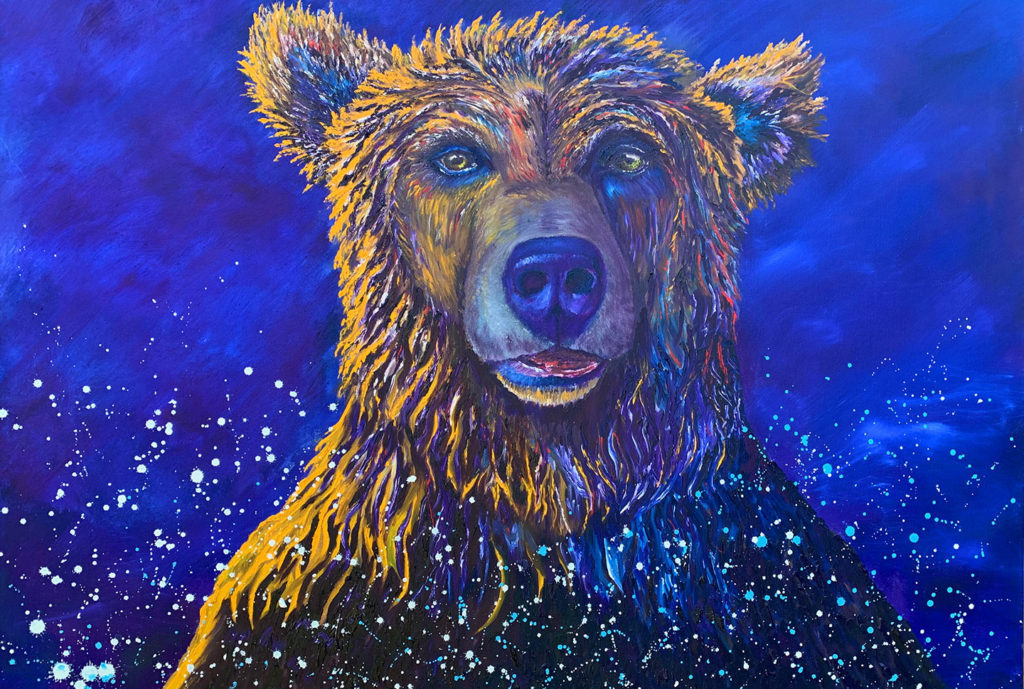
Grizzly bear art in Canada interprets the animal’s physical power, intelligence, vulnerability and relationship to habitat. The most compelling paintings avoid treating the grizzly as a generic wilderness emblem. They attend to an individual bear’s posture, gaze and behaviour—and often to rivers, salmon systems, mountains or human pressures around it.
01
Why grizzlies command the canvas
Few Canadian animals combine mass and sensitivity so visibly. A grizzly can appear formidable, curious, concentrated or calm. The broad head, shoulder hump, long claws and dense coat offer strong structure; subtle changes in ear position and gaze can completely alter the emotional reading.
Scale matters. A large canvas can create a face-to-face encounter, while a distant figure in landscape emphasizes habitat and the animal’s place within it.
02
From symbol to observed animal
- Look for believable weight and skeletal structure beneath the fur.
- Notice whether the pose suggests actual behaviour rather than a stock emblem.
- Consider how background, season and light establish habitat.
- Ask whether colour supports mood, atmosphere or physical form.
03
Colour and contemporary interpretation
Contemporary artists need not use literal brown. Saturated blues, violets, reds and golds can describe reflected light or emotional intensity while preserving the animal’s underlying form.
In Graham Watts’ Grizz, the close crop and direct gaze heighten presence, while expressive colour moves across the fur. The work is a useful example of interpretation built upon recognizability.
04
Conservation without cliché
Art can create attention and empathy, but a painting is not automatically conservation action. Responsible interpretation distinguishes emotional response from scientific claims and directs factual ecological questions to qualified sources.
05
Commissioning a grizzly bear painting
A strong commission brief identifies the desired encounter, habitat, mood, scale and reference material. Discuss whether the image will be a portrait or a full environmental scene, and confirm copyright permission for any supplied photography.
Reviewed August 10, 2026 · Editorial policy